Camille Ford: Applying Business Rules to the Business of Love, and Becoming Her Own Best Work
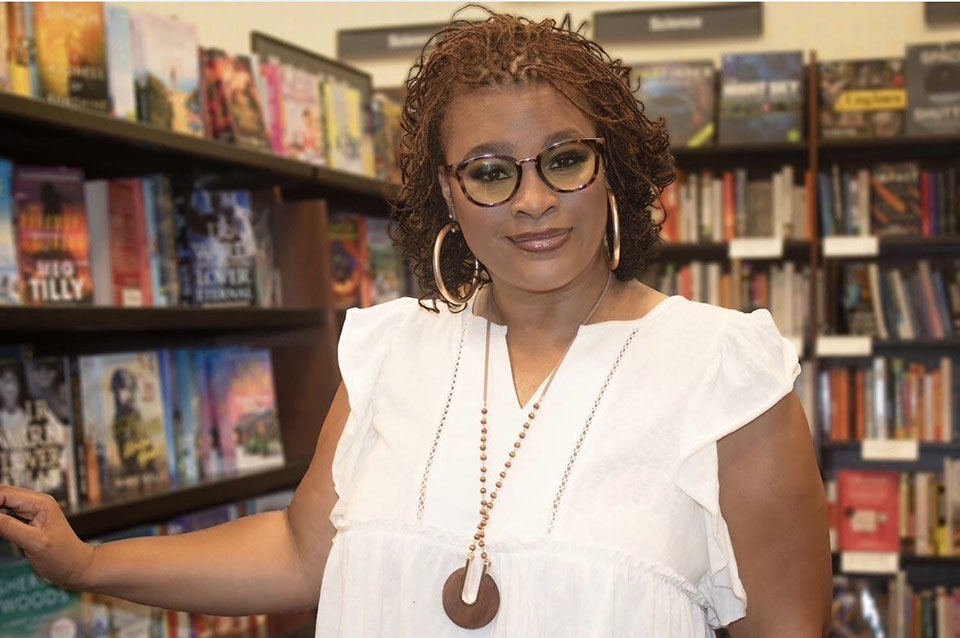
Q: You describe Articles of Commitment as applying corporate governance to romance. What was the moment you realized dating and business were failing you in the same way?
CF: The moment came when I looked up and realized nobody in my life was who I needed in order to grow. Not one of them. What I finally saw was that I had it backward the whole time. I kept showing up as the person other people needed, and I kept waiting to be met the same way. In business, people came to fill their pockets. In dating, men came to fill a void. Different setting, identical transaction. I was the resource in both, the one giving, funding, pouring out, and the return never came because that was never why they were there. That's when it clicked that being needed and being valued are not the same thing, and that I'd been accepting the first one as if it were the second. Everything I built after that, the framework, the bylaws, all of it, came from deciding that access to me was going to cost people evidence that they were actually there to add to my life, not just draw from it.
Q: Most dating advice tells people to trust their feelings. Your framework asks them to run due diligence first. Why do you think we treat love as the one area of life where we're supposed to skip the vetting?
CF: Because we've collapsed every stage of a relationship into a single moment and called the collapse romance. In every other part of life, we understand that things come in order. You don't get the corner office on the day you apply. You don't get the mortgage before the bank runs your numbers. But in dating we're told that the second the chemistry hits, all of it is supposed to arrive at once, the attraction, the exclusivity, the future, the trust. So, we skip the vetting because we were taught the vetting is the thing that ruins the magic, when the vetting is the only thing that makes the magic safe to feel.
Here's what that skipping actually looks like. Two people meet as perfect strangers, which means they're both free agents, and a free agent is exactly what it sounds like. You're dating openly, gathering information, and you owe each other honesty and nothing else. Casual dating is one contract. Exclusivity is the second one. Courtship is a third. They have different terms, and you do not get the terms of the third by showing up for the first. Yet people mistake chemistry for compatibility on day one and then get offended, genuinely wounded, that the stranger across the table is seeing other people. The nerve of that. You're upset about a contract nobody signed.
And the tell is how fast some of them try to fast-track themselves into your personal life. A person you met three weeks ago starts acting like access to your time is a right rather than something you grant, and expects you to make them a priority before they've been anything else, before you know how they handle conflict, or money, or a plain disagreement. But priority is a seat you assign based on what someone has actually shown you, not one they claim by texting the most or pushing the hardest. Persistence is his choice. Priority is mine.
So no, I don't think requiring evidence is cold. "You're not an option" is a sentence you earn the right to say after you've put in the time, the effort, and the emotion, and the person still won't choose you. The whole point of running due diligence first is so that once someone actually clears the gates, you can finally stop evaluating and start loving them in peace. The structure isn't the opposite of romance. It's the shelter romance gets to live inside.
Q: The book is built on 83 bylaws. Can you walk us through one or two that people push back on the hardest, and why do you stand by them?
CF: The one that makes people angriest is the Free Agent Phase. The bylaw is simple. Until you and another person have actually sat down and agreed to be exclusive, you are both free agents, which means you're each free to date other people and you owe each other honesty and nothing more. People hate this. They want to feel exclusive without ever having the conversation that makes it real, so they meet someone, feel a spark, start behaving as if a commitment exists, and then get bitter when the other person, who never agreed to anything, keeps their options open. That anger is misdirected. You cannot be betrayed by a contract nobody signed. I stand by it because the alternative is the thing that wrecks people, the silent assumption that turns into resentment, when one honest sentence at the start would have spared everyone.
The second one people fight me on is the Probationary Period. The culture treats the exclusivity conversation as a finish line, the moment you get to exhale and stop paying attention. My bylaw says the opposite. Exclusivity is not the end of the evaluation; it's the beginning of the trial. That sounds unromantic until you watch what happens to people who stop observing the second they get the title. The disqualifying stuff usually shows up in months three through nine, exactly when everyone tells you to relax. I'm not saying to withhold your heart. I'm saying keep your eyes open while you give it, because a label has never once protected anyone from an unreliable partner.
The third, and this is the one that offends people who think they're being generous, is what I call emotional due diligence. It means you do not sign up to be someone's repair service. People love to believe their love will be the thing that finally heals him, that his patterns will dissolve if you just love him hard enough. That's not love, it's a rescue fantasy, and it's expensive. If a man shows you, he blames every ex for every ending and takes responsibility for none of it, he has told you exactly how the story ends with you. I stand by it because I've watched too many good women mistake a construction project for a relationship and spend years renovating a man who never asked to be fixed. And I was one of those women.
Q: You're not just writing the framework; you're dating by it in real time. What has that experiment actually cost you, and what has it revealed that surprised you?
CF: The cost is the noise, and the loneliness of holding a line inside it. When you decide that access to you has to be earned, you find out fast how many men have no intention of earning anything. I open an app and the first word out of a stranger is "gm queen," or "good morning beautiful," or "hey sexy," before he knows my name, before he knows one true thing about me. One man's opening line was "thick, yes Lord." I'm somebody's mother. And here's the part that tells you everything: I only want my man talking to me that way. The endearment isn't the problem. The unearned access to it is. "Sexy" from a man who has put in the time and cleared the gates is intimacy. "Sexy" from a stranger on the first swipe is a man helping himself to a seat nobody offered him. Same word, opposite meaning, and which one it is depends entirely on what he has actually earned.
What genuinely surprised me is that the men got bolder instead of better. I expected the effort to be low. I didn't expect it to be absent. These are representatives, not real men. A pet name he deploys on swipe one is a script he runs on everybody, which means it carries zero information about me, and a woman doing her due diligence needs information. A man who leads with "beautiful" before he learns your name has told you he isn't evaluating you at all, he's casting you, and you are interchangeable in his mind with every other woman he sent the same line to that morning. That's the opposite of being chosen.
Then there are the ones who call me "princess" and "sweetie," names my daddy called me, deployed at a woman who is almost fifty years old and a mother. Approaching me with sweet talk as if I'm a child to be won over tells me the same thing the "queen" openers do. He never looked at who I actually am. He picked a script and pointed it at whoever answered.
So, the whole experiment confirmed the thing my book argues on every page. People want the prize without the process. They want the intimacy without the evidence, the last gate at the first hello, the language of a partner from the position of a stranger. My inbox is the daily proof of exactly why the framework exists. Every one of those openers is a man requesting a level of access he has done nothing to earn, and the fact that he's offended when he doesn't get it is not a strike against my standards. It's the clearest argument for them.
Q: Your readers already apply standards, accountability, and due diligence at work. What's the first small thing you'd tell them to bring from their professional lives into their love lives?
CF: A man will list his house, his car, and his job like he's presenting credentials, and I'm supposed to be impressed. Impressed by what, exactly? That he's an adult? The house is a place for me to spend the night. The car is how he gets to me. The job is what keeps the first two running. None of that is character. None of it tells me how he handles conflict, or whether he keeps his word, or what he's like when something goes wrong, or whether he's patient enough to quietly support me while I'm building something of my own. Those are logistics, and logistics are not qualifications.
At work you would never hire someone because they owned a nice briefcase and showed up on time and called it a resume. Adulting is the floor, not the ceiling. Others skip the bragging and go straight to it. Before they've asked one real question about who I am, it's "where do you live," "you ever been to my state." That's not curiosity, that's a man solving for access. He's working out how to get to me before he's earned the right to know my zip code, and a man measuring the distance to my door before he's measured a single thing about my character has told me exactly what he's optimizing for. And here's the other thing men need to hear being single doesn't qualify you for every woman. Your availability is your problem to solve. It is not my obligation. A man being unattached tells me exactly one thing, that he's unattached, and I still have every question left to ask.
Q: What do you want a reader who's exhausted by modern dating to do differently the day after they read this interview?
CF: Have fun. I mean it. If you're exhausted, part of it is that you're auditioning every man for the role of your person before you've even finished your first cup of coffee. That's a heavy way to date, and you did that to yourself. But the other part isn't your fault at all. You're exhausted because so many of them show up needy, already leaning on you, already wanting to be a priority, already asking to be filled up, before they've earned a single thing. That's the real drain. It isn't the dating. It's carrying grown men who arrive with their hands out.
So, change what you're there for. This early part isn't the wedding, it's the free agent phase, and it's supposed to be light. Date to explore. Get out of the house. Meet somebody whose life looks nothing like yours and let them be interesting for an outing. And here's the part that you shouldn’t miss having fun and having standards are not opposites. You don't have to turn into a detective to protect yourself. Just pay attention while you enjoy yourself, because how a man shows up over an easy outing tells you almost everything, whether he pours into the evening or just waits to be poured into. Date to connect on a human level, and let the needy ones fall away on their own. That's not exhausting. That's paying attention with your guard down and your eyes open.
Q: What is one word of advice you can offer to young women who want to reach your level of success?
CF: Regardless of the roadblocks and setbacks, never give up on what your heart is most passionate about. Surround yourself with people who want to see you win. Cling to the ones who are smarter than you, and value their wisdom
Q: Can you tell our audience one of your most memorable moments of your career?
CF: Honestly? It hasn't happened yet. I know how that sounds, but I mean it. I've had good moments, books finished after years of writer's block, a magazine built off my articles alone, hosting book signings where my closest friends showed up to support me. But the one I'll call my most memorable is still ahead of me, because I'm not done, and I haven't reached my own definition of successful yet. I’m a fighter who doesn’t give up. Someone will ask me again in a few years. The best thing I've ever made is still in the making, and that's me.
Q: At the start of your career, what do you wish you had known?
CF: To vet everyone who charged a fee to do work you could’ve done yourself.
Q: Which woman inspires you and why?
CF: Myself. I don't say that lightly or out of vanity. I say it because I know what I've walked through to still be standing here, still building, still choosing to love people even after love has cost me things too precious to name. Every fiber of my being has been under attack in every season of my life, and this journey is not for the weak or faint at heart. The woman who inspires me is the one I had to become to survive my own life, and every day she keeps her promises to herself and refuses to close her heart just because closing it would have been safer. If I can be that for someone reading this, someone who's been given every reason to go cold and hasn't, then good. That's the one I'd point to.
Q: What advice would you give to young women who want to pursue their dream and start a business?
CF: Learn Maslow, then rearrange him on purpose. He gave us five levels stacked on top of each other. At the bottom are the physical needs, the food, the rest, the roof, the body kept running. Above that comes safety and security, money that's actually yours, independence nobody can revoke, a foundation that doesn't wobble every time someone's mood does. Then he stacks love and belonging, then esteem, then self-actualization at the very top. Beautiful theory. For a woman building something out of nothing, secure those bottom two levels like your life depends on it, because it does, and then get very deliberate about the order of everything above them.
Here's where I break from him. When you're starting out, love and belonging belongs near the bottom of what drives your decisions, second to last, and not because connection doesn't matter. It's because the need to belong is the exact thing that will talk you out of your dream. It's the voice that whispers don't be too much, don't outgrow the people around you, don't make anyone uncomfortable by wanting more than they ever wanted for you. Women lose more businesses to the fear of losing people than they ever lose to the market. So, secure yourself first. Get your foundation to a place where it can't be pulled out from under you by anyone's approval or anyone's absence, and let the dream itself pull you up.
Put esteem dead last, because chasing applause and status before you've built anything real is how you end up performing success instead of owning it. The likes are not the money, and the title is not the security. When you finally get to love and belonging, and you will, you'll arrive as a woman who's already secure, which means you'll choose your people instead of needing them, and that one shift changes everything about who you let close. Build the floor nobody can take from you first. Belonging you choose is worth ten times the belonging you went begging for.
Q: What advice would you give to young women who want to succeed in the workplace?
CF: I was 22 when I moved to Charlotte and got hired in the mechanical engineering department at UNC Charlotte. My supervisor back then, the late Lebra K. Nance, told me flat out that I'd never make it in corporate America. She was right. I've never grown inside a workplace, so I'd be lying if I told you I know how to succeed in one. What I do know is that every workplace runs on rules, and if you want to grow or get recognized, you have to learn them. Take the professional development courses they offer, go get the higher education, ask the people above you exactly how advancement works, spend time around the ones who actually make the decisions, and understand that holding an opinion that cuts against the grain will cost you almost everywhere.
The honest truth is I always malfunctioned on the job, and it took me a while to understand why. It wasn't the work. It was a real depression that came from knowing I wasn't where I was supposed to be, which was being my own boss and running my own thing. I didn't belong in any of those places. I belonged exactly where I am now, and the sooner a young woman can tell the difference between a workplace that's actually building her and one that's just holding her back from becoming who she was created to be, the sooner she can decide whether succeeding there is even her goal.
Q: After high school, where did you feel your career path would take you?
CF: After high school, I thought I'd go to college with my twin sister. I lost her when we were sixteen, and in the grief that followed I dropped out. At seventeen I talked my way into a business administration and data processing program, which led to an internship at Penn State, where I met my first son's father. For a while I honestly went with the flow, not knowing what I wanted. After my son was born, things looked bleak. I left, and eventually landed in North Carolina. I worked at N.C. A&T, then UNC Charlotte, then University of Phoenix, where I finally told myself I could not leave that place the same way I walked in. I worked several years for my communications degree. I was laid off in 2011 on the very same day I got my braces off, and I could not stop smiling through the entire layoff. I walked straight out of that and into publishing my first book, and that's when the con artists started showing up, some as recently as with the magazine.
Q: Can you tell us how you manage your work life balance?
CF: That's easy. Everything is in waves. While my magazine was starting, I focused heavily on pitching to secure features. While it's in the process of rebranding, I focus on promoting my book, Articles of Commitment: The Bylaws of Modern Romance. I live my life by my calendar, which truly annoys the men I go out with on casual dates. They don't like being put on a calendar. My closest friends call to check on me, and I call to check on them. But I'm not in the streets. I show up to my doctor's appointments and my dental cleaning, and I log onto Sunday services that are streaming while I work. But I do work seven days a week with no qualms.
Twenty-Five Things About Camille Ford
1. If you could share a meal with any 4 individuals, living or dead, who would they be?
My late twin sister, Toni Morrison, Maya Angelou, Princess Diana.
2. What celebrity would you like to meet at Starbucks for a cup of coffee?
Shonda Rhimes. I don't want anything from her. I just want to sit across from a woman who figured out how to turn the stories in her head into an empire and ask her what she knows now that she wishes she'd known back when she was still trying to get a seat at the table, before she built her own.
3. What’s your favorite thing to do in your free time?
My time isn’t free.
4. Who is the most fascinating person you’ve ever met?
My first love, Mr. Executive
5. What was the last book you really got into?
My own novel, Karma: The Art of Man. It's about a womanizer who wakes up impotent and goes on a quest to win love by using his heart instead. It's a trilogy, and the first installment releases in December.
6. What’s the most amazing adventure you’ve ever been on?
Discovering my own strength. No trip has ever taken me anywhere that far.
7. Where’s the strangest place you’ve ever been?
In a man's head.
8. What’s your favorite international food?
Indian or Caribbean
9. Who is your favorite author?
Robert Greene
10. What’s your favorite app on your phone?
All the dating apps. Men are the most hilarious species of human.
11. Best and worst flavor ice cream?
No such thing.
12. What’s the most spontaneous thing you’ve done?
Moved from Philadelphia with an 18-month-old, met a guy four days later, got engaged five months after meeting him, and married him less than a year later.
13.What’s your favorite quote or saying?
We met for a reason, not for every season, but I'm a lifetime connection.
14.If you unexpectedly won $10,000, what would you spend it on?
Marketing.
15. Are you a morning person or a night owl?
I wake up at 5am and go to bed around 2am. You tell me.
16. Favorite Dessert?
Smh, cheesecake. And if I'm depressed, that's what I'm eating all day, even knowing I'm lactose intolerant and will have to stay in bed for several days to heal.
17. Do you read reviews, or just go with your gut?
One negative review, and I'm not buying it.
18. What’s your big passion?
Writing stories.
19. What song would you sing at Karaoke night?
I Wanna Dance With Somebody by Whitney
20. Have you ever met anyone famous? Who?
John Legend, Steve Harvey and Nephew Tommy, Patti LaBelle
21. Which of the five senses would you say is your strongest?
My vision, and not for the obvious reason. It's what I notice with it. I can walk into a gathering and tell who's genuinely happy and who's just performing it. I catch the faces that don't match the words. People think they're hiding it, and they're usually not, at least not from me.
22. What were you like in high school?
Introverted
23. Would you rather cook or order in?
Cook
24. What was your favorite subject in school?
Language Arts
25. Cake or pie?
Both, unapologetically.